Skip to content
Home

Projects2016–2026

Every project, since 2016

Each one started with someone’s real problem: a clinician, a lab, a foundation in Kenya. Here is what the teams built, year by year, with the photos, slides and posters from the time.

Case studies

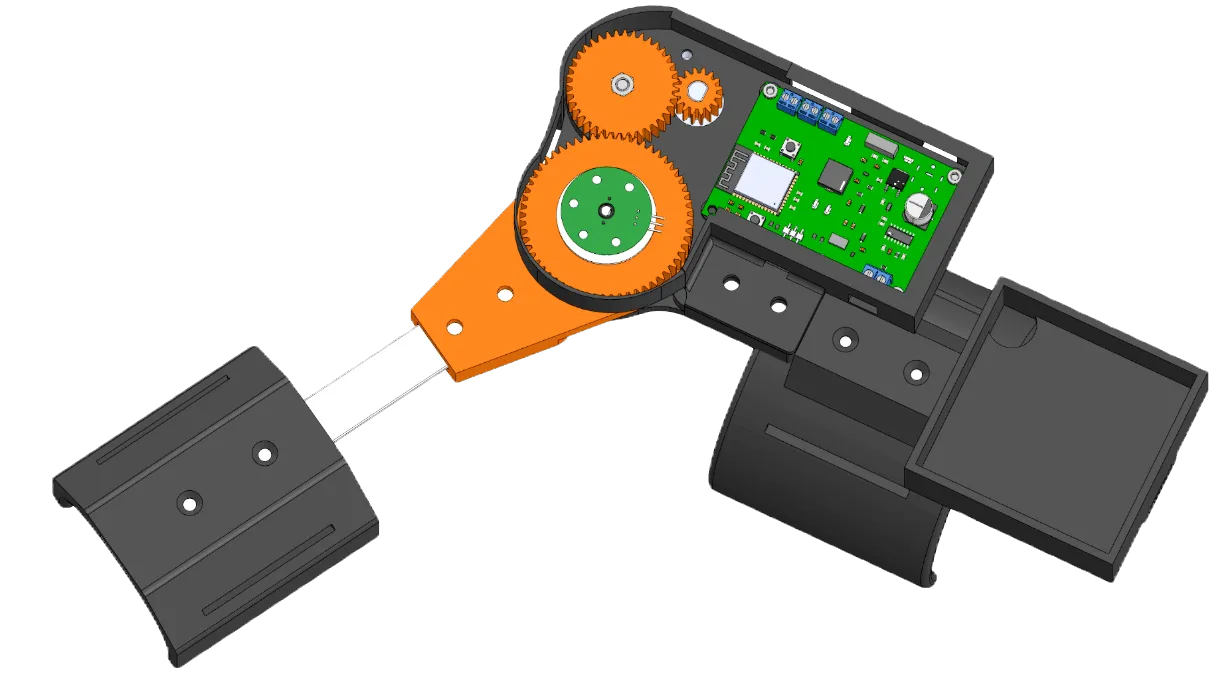
CAD render of the Lifting-Assistive Device with its geared actuator3rd place, Engineering Expo 2026

Health tech2022–2026

Lifting-Assistive Device (LAD)

A wearable that helps people with limited arm strength lift, built as an affordable alternative to commercial devices. Four years of design reviews, from a resin cuff and a thread to a geared actuator that took 3rd place at the Engineering Expo 2026.

Client
James Lewallen, CO, UW Health Orthotics & Prosthetics
Result
3rd place, Engineering Expo, spring 2026
Read the case: Lifting-Assistive Device
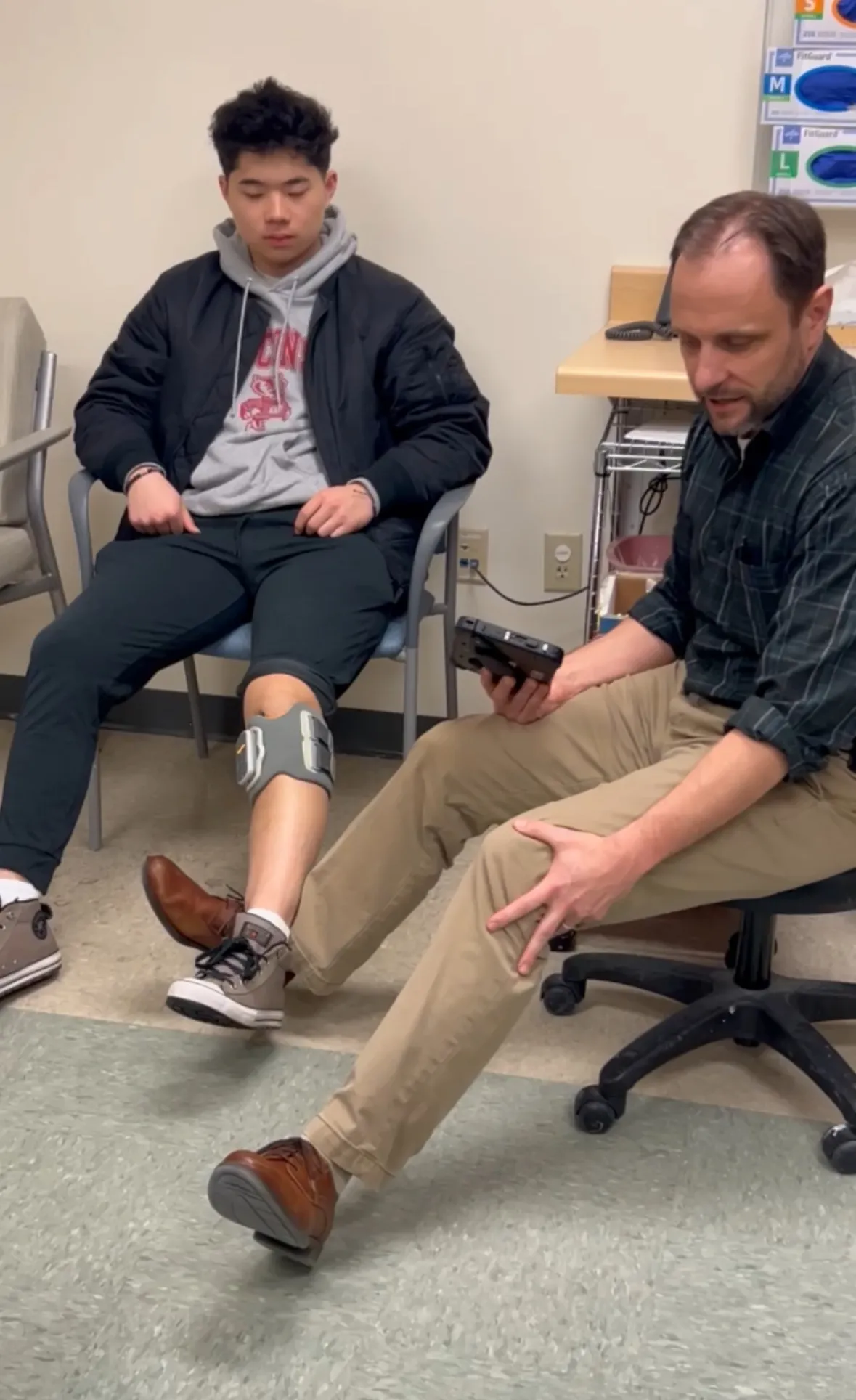
FES device strapped below a person’s knee during testing

Health tech2024–2026

Functional Electrical Stimulation (FES)

An affordable device for foot drop. It senses each step and sends a small electrical pulse so the foot lifts, with the settings tuned from a phone app instead of in a clinic.

Client
James Lewallen, CO
Sub-teams
Sensing, app, stimulation circuit
Read the case: Functional Electrical Stimulation
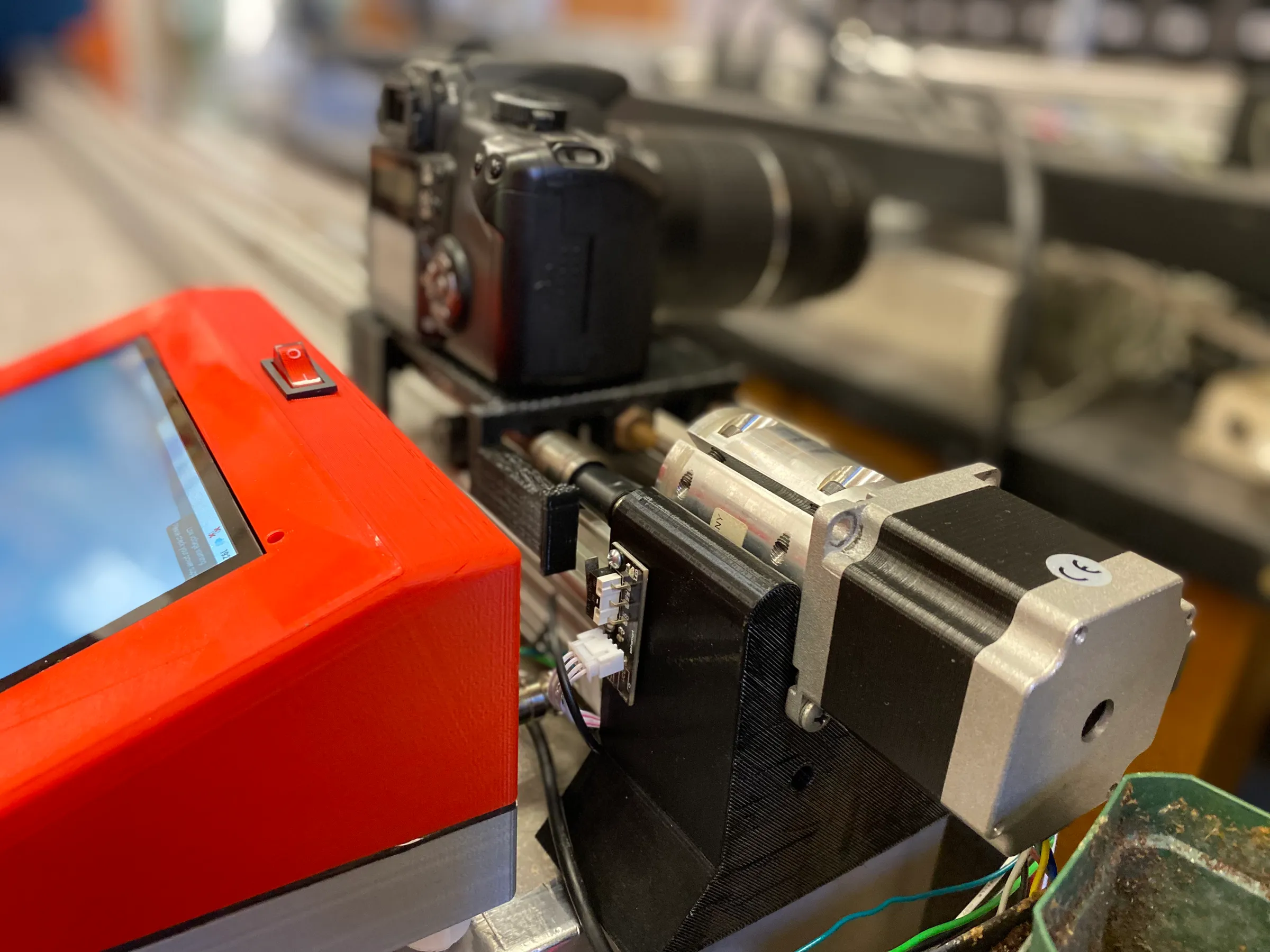
Orange touchscreen enclosure on the AWESOME-O linear rail

Space2021–2022

AWESOME-O robotic interface

A camera on a linear rail that photographs plant experiments for astrobotany research. The team rebuilt it with a new interface, a touchscreen enclosure, an automatic filter switcher and a sturdier rail.

Client
Dr. Richard Barker, Gilroy Lab
Built
UI, enclosure, filter switcher, rail
Read the case: AWESOME-O robotic interface
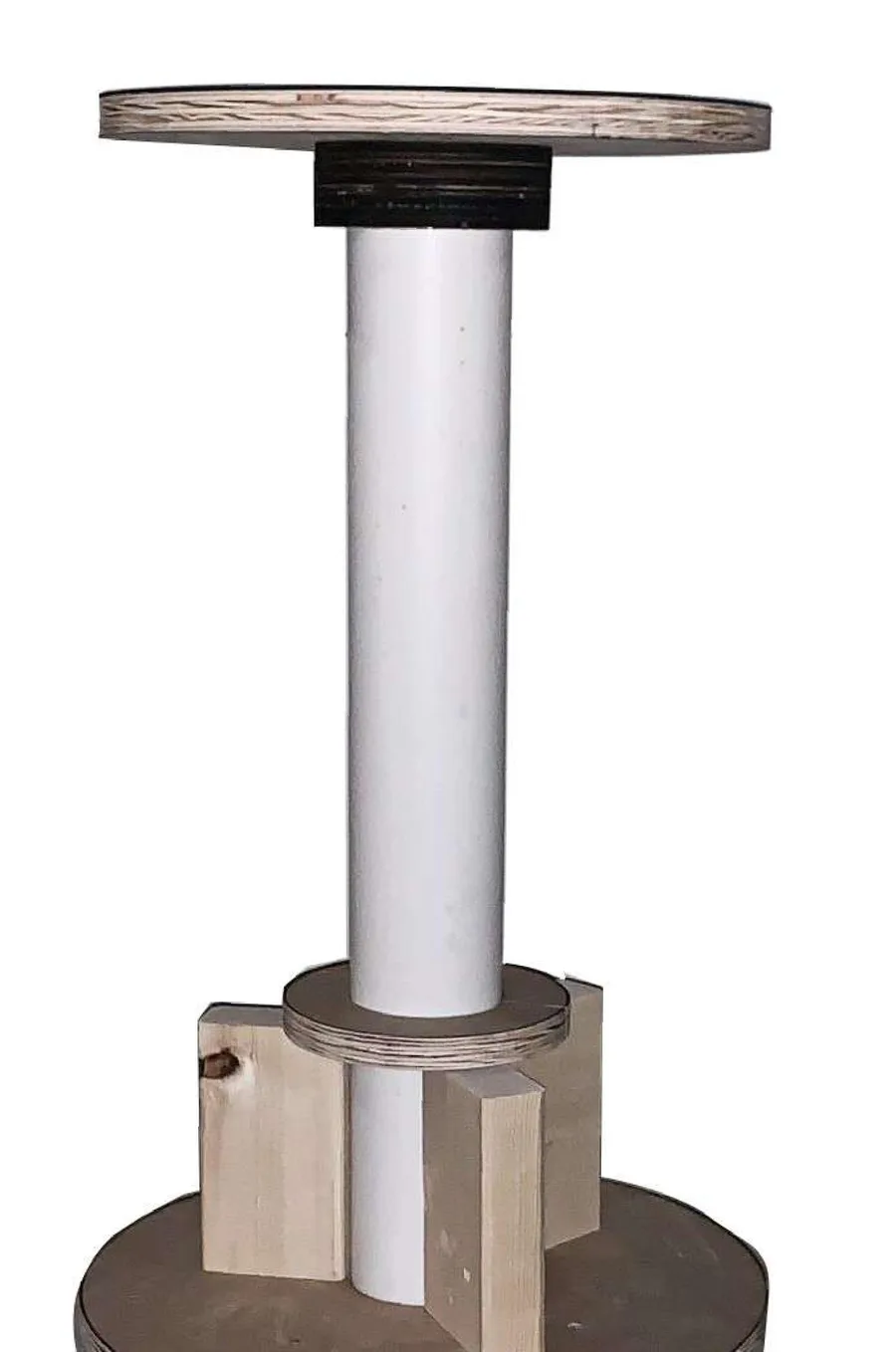
The first biomass briquette prototype: a plywood stool on a PVC pipe

Community impact2019–2020

Biomass Briquette Machine

A stool that doubles as a press. Body weight compresses sawdust and farm waste into briquettes that can be burned instead of wood, designed for Kenyan communities with Merry-Go-Strong.

Client
Prof. Lesley Sager, Merry-Go-Strong
Prototype
Built with the help of Delve
Read the case: Biomass Briquette Machine
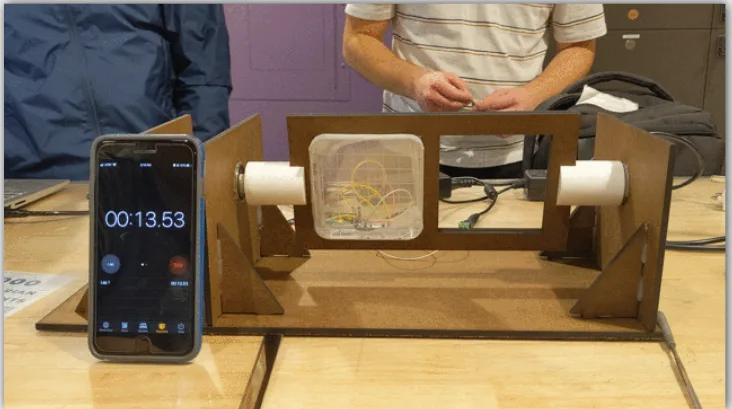
The 2D clinostat turning petri dishes next to a phone timer

Space2019–2020

2D Clinostat

A clinostat for UW–Madison’s botany research lab. It turns petri dishes at a steady 1 RPM, so plant roots and shoots grow as if gravity had been switched off, without leaving Earth.

Client
Dr. Richard Barker, UW–Madison botany lab
Speed
1 RPM, one full turn a minute
Read the case: 2D Clinostat
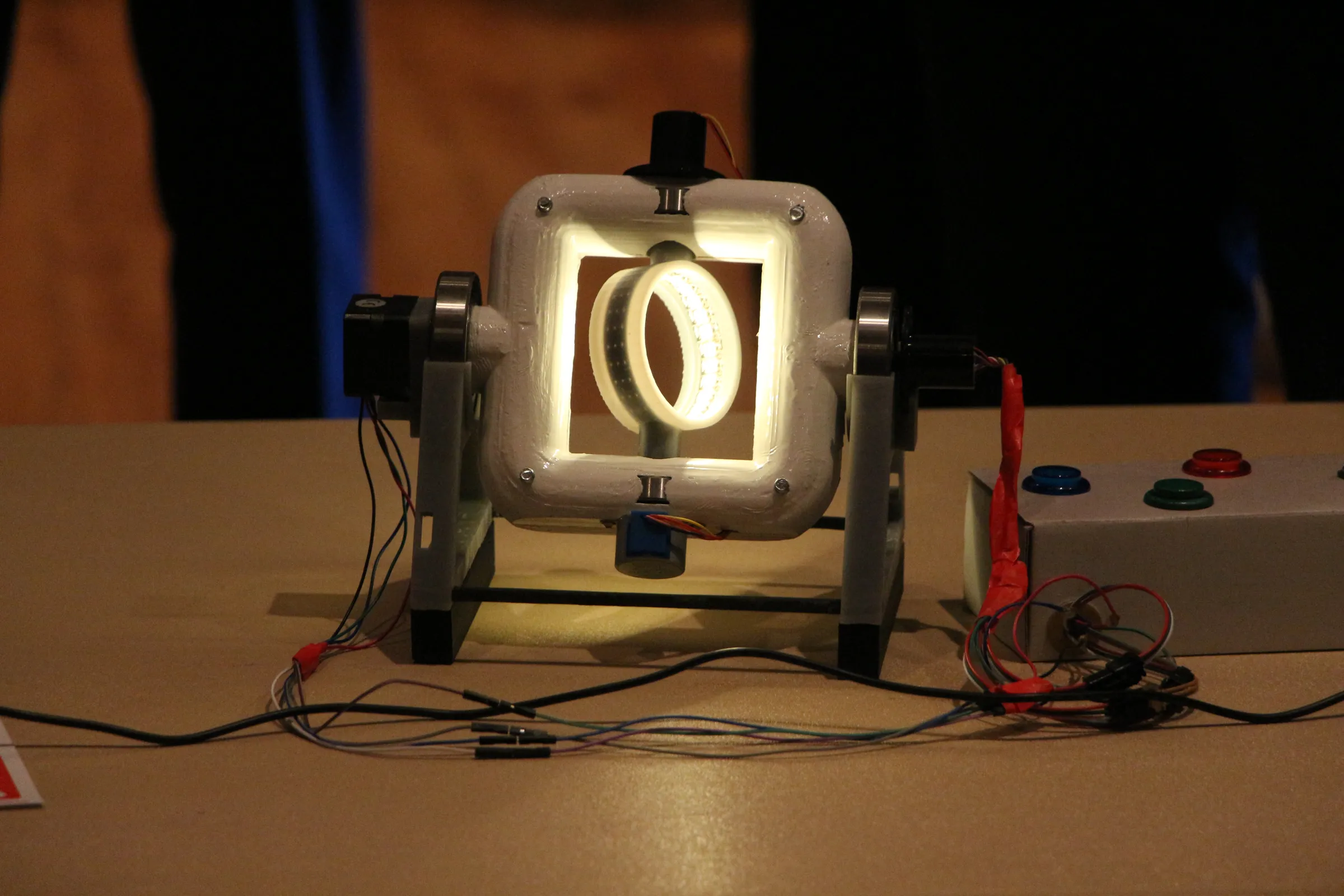
The 3D clinostat glowing on a dark stage

Space2016–2017

3D Clinostat

A frame that spins plant samples on three axes in constant, smooth motion, simulating microgravity for research on Arabidopsis thaliana.

Clients
Dr. Simon Gilroy & Dr. Richard Barker
Axes
Three
Read the case: 3D Clinostat
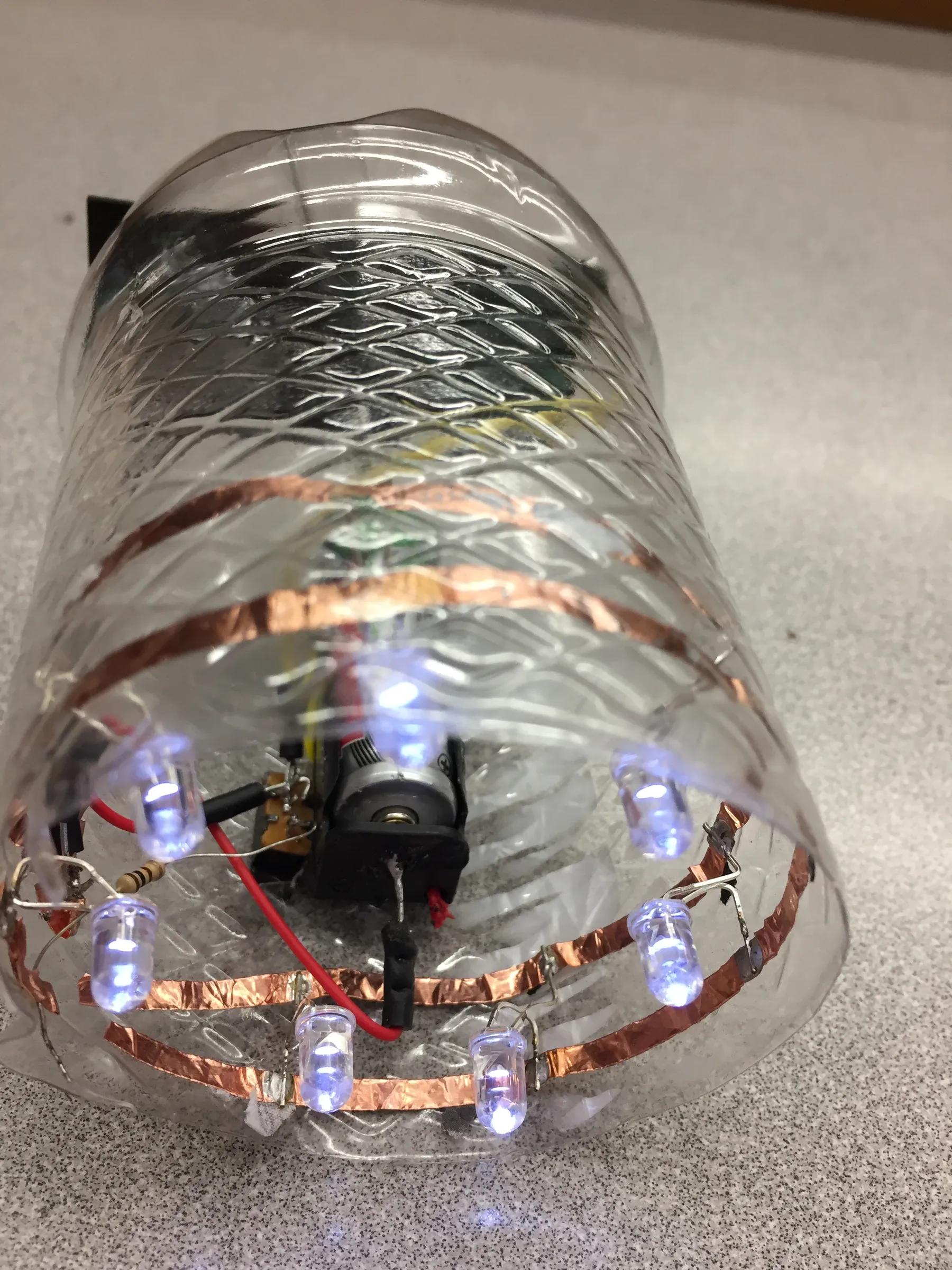
Prototype solar lamp with LEDs inside a plastic bottle

Community impact2016–2017

Solar lamps for Kenya

Low-cost solar lamps and a step-by-step workshop to build them, taken to Kenya in winter 2016–17 so women can light their work after sundown.

Client
Lesley Sager, Merry-Go-Strong
Deployed
Kenya, winter 2016–17
Read the case: Solar lamps for Kenya

Archive 2016–17

The first year

Insight Wisconsin’s first full year of projects spanned community impact, out-of-this-world science and software. Alongside the 3D Clinostat and the solar lamps, these teams presented their final designs in spring 2017. Problem, solution and next steps are taken from their slides.

Crutch~ScooterMulti-Functional Mobility Device

Team: Mary Claire Mancl, Josh Merchant, Max Roth, David Seamon, Manthra Venkatakrishnan, Cayden Wiese

Problem
Crutches are slow and uncomfortable. A scooter only works on flat, hard surfaces. Using both is cumbersome.
Solution
One device that replaces both crutches and scooter and switches quickly and easily between the two. The conversion system is simple and quick, uses both crutches and has structurally sound joints.
Next
Improve the transition system and the joint design, fabricate it in aluminum and reduce the total material.

Safe Walk

Team: Lucas Pflug, Ben Peterson

Problem
There was no convenient way for students to get a Safe Walker. Calling is something people are less willing to do nowadays, and students don’t know exactly when the Safe Walkers will arrive.
Solution
An app so students can get a Safe Walker: easy to use, with relevant information about SafeWalk, information about the walker, live tracking of the walkers and in-app messaging. Only available to students.

Biomolecular Algorithm Integration

Team: Cory Van Beek, Tristan Wentworth, Brian Gosink, Matt Kizaric

Client
Julie Mitchell, Biochemistry and Math Department
Problem
The KFC2 hot spot prediction server was written in five languages (Python, C++, C, Fortran and shell), worked only on Unix, ran from the command line and worked off of extensions. The client wanted the files standardized and integrated.
Solution
Standardized on Python only, so it runs on Unix or Windows, with a simple GUI or text input and mostly one integrated program.
Next
Easier to understand and change, and open source so more people can improve the program.

Atmospheric Drones

Team: Zach Ehmer, Seth Eiseman, Brian Gosink, Kevin Kirk, Jonas Klare, Megan Sweet

Client
Professor Timothy Bertram, research on chemical processes in the atmosphere
Problem
An easy way to collect atmospheric data at 100+ feet, with CO and CO₂ sensors.
Solution
A drone attachment for the 3DR Solo with interchangeable CO and CO₂ sensors. The casing holds a CO sensor, an air pump, a Raspberry Pi Zero and a battery.
Next
Accessible to citizen scientists and drone enthusiasts across the US, and compatible with different drones.

Kinesiology Reports

Team: Barbara Pereta, Monica Sevaraj, Sam Radovich, Yogesh Balaje

Client
UW–Madison Kinesiology Department
Problem
A Kinesiology Department study uses the ActivPal sensor to record sitting and standing time, and needs a report for each patient. Done by hand with lots of data, that took almost an hour per patient.
Solution
A Java program that converts the data into the needed graphs right away and saves them as a JPG. It “gives the researchers more time to be analyzing the data.”
Next
Make the two sensors into one, make it smaller and more comfortable, and improve the program’s functions.

Water Quality Monitor

Team: Jacob Larson, Andrew Sharpless, Gopika SenthilKumar

Problem
“Consumers are not empowered to know the quality of their own water. They have to heavily rely on complicated science kits and help from expensive professionals to test their water.”
Solution
Electrochemical cells measure voltages caused by specific contaminants. Code converts the voltage into a concentration with the Nernst equation, and the result is shown in plain terms based on research data. The prototype has a probe, an amplifier, a microcontroller and an LCD display.
Next
An app and a smartphone backpack, more interchangeable probes, lower cost, a more compact build and a waterproof casing.

Study Guide Collective

Team: Danica Fliss, David Chen, Eli Schlossberg, Jessica Tang, Monica Ceisel

Client
Daisy Yonkus, StudyBlue Campus Manager, and Becky Splitt, StudyBlue Chief Strategy Officer
Problem
Per the team’s slide, “80% of college students study alone which is inefficient.”
Solution
Crowdsourced study guides that visually map concepts, built with Unirest and JSON data. The API collects data for concept maps and connects words to other words. The tool analyzes, organizes and returns a complete set of notes, with OCR for handwritten notes.
Next
Concept testing among students at 4-year institutions, starting with UW–Madison, building the interface and more advanced organization of text.

Vibrating Pipes

Team: Joshua Miller, Isaac Lodise, James Ewald, Ryan Nameth

Problem
Hair, shampoo and gunk cause massive clogs in the trap and can go unnoticed for months. A plumber can cost up to $85 an hour and take up to 3 hours, chemicals can corrode pipes and aren’t 100% effective, and no device can be placed inside the pipes.
Solution
A power source (for now a battery pack), a DC motor and a cam clamp directly onto the pipe and vibrate it in a controlled way to clear clogs.
Next
Test motor speeds, materials and types of clogs. Reach the target market: less noise, a reasonable price and safety (no flying blocks). An apparatus to hold the pipes, better looks and permanent wiring.

Plant Clock

Team: Troy Zeuske, Keegan Moldenhauer, Becca Hyatt, Sarah Neufcourt, Matthew Bugajski, Tevin Li

Client
Dr. Richard Barker, UW–Madison Botany Department
Problem
The client “wanted a clock that could hold plant experiments and capture photos of growth over time.”
Solution
A clock with petri dishes around the dial and a camera 5 inches above them on a rotating arm. A Raspberry Pi controls and powers the motor and the camera, and the arm moves every hour: 2 pictures per petri dish per day. Designed in SolidWorks, with LED lighting.
Next
Cloud functions, time-lapse video, a phone app or website to control the lights, a minute hand, a user interface to choose the speed and smoother rotation.

From the final presentations, 2016–17.