2024–2025First design
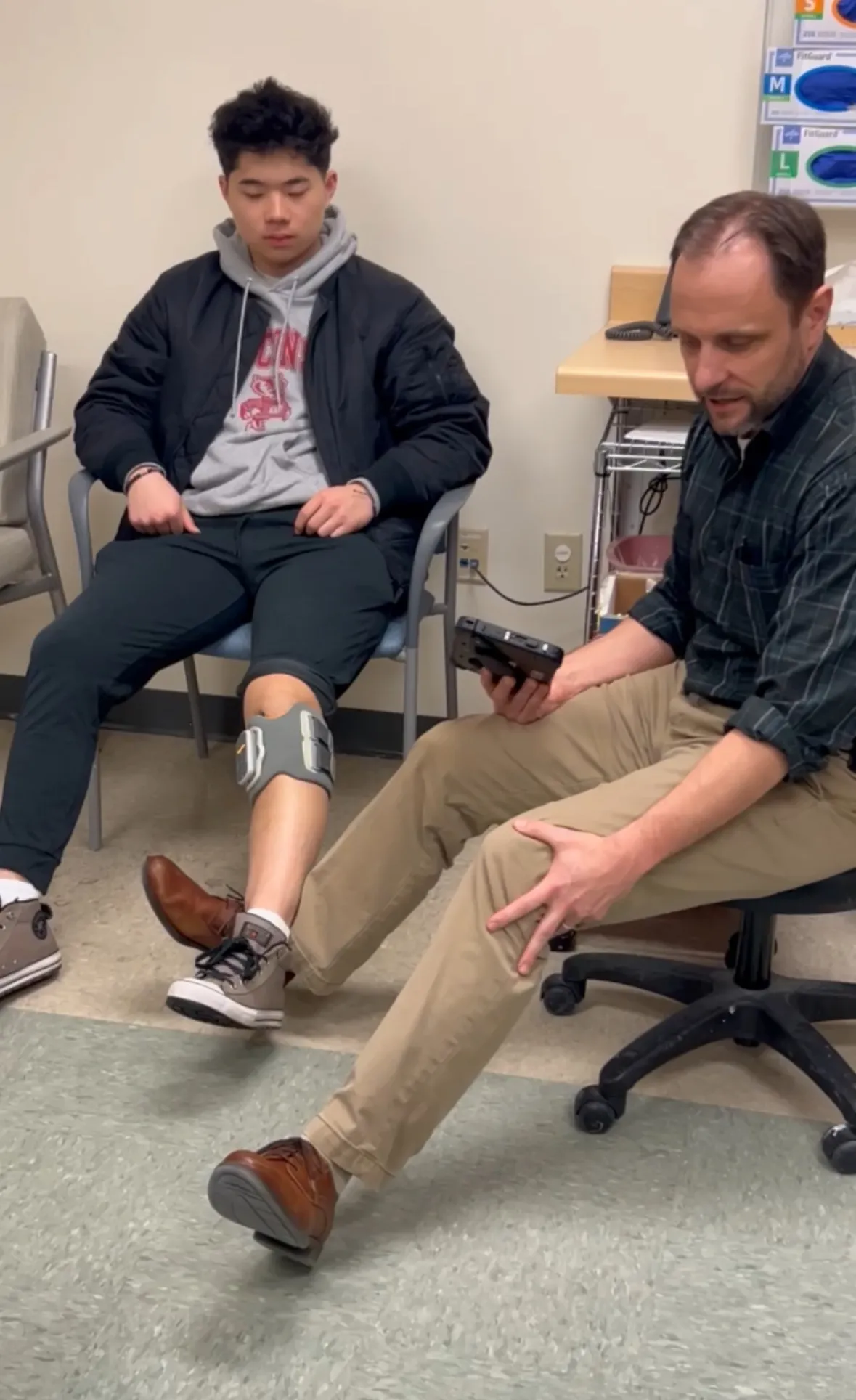
A phone strapped to the leg
The first version used a phone strapped to the leg for gait analysis, and a companion app to set the pulse parameters. The team met the client to test it on a real leg.
An affordable device for foot drop. It senses each step and sends a small electrical pulse so the foot lifts, with the settings tuned from a phone app instead of in a clinic.
The problem
Foot drop makes it hard to lift the front of the foot (dorsiflexion) while walking, so the toes catch the ground. Functional electrical stimulation helps by triggering the muscles at the right moment in each step.
The device on the market, the Bioness L300, costs $5,000 or more and needs a clinician’s oversight or external calibration. The team set out to build one that is affordable and that the user can set up from a phone.
How it was built
2024–2025First design
The first version used a phone strapped to the leg for gait analysis, and a companion app to set the pulse parameters. The team met the client to test it on a real leg.
2025–2026New prototype
The team built last year’s design while developing a new prototype. The phone was replaced by an IMU on the device itself, the app got a better interface and a calibration mode, and everything talks over Bluetooth.
The stimulation circuit moved from constant voltage to constant current, with overcurrent protection.
Next steps
As listed by the team at the end of the project.
Credits
James Lewallen, CO